
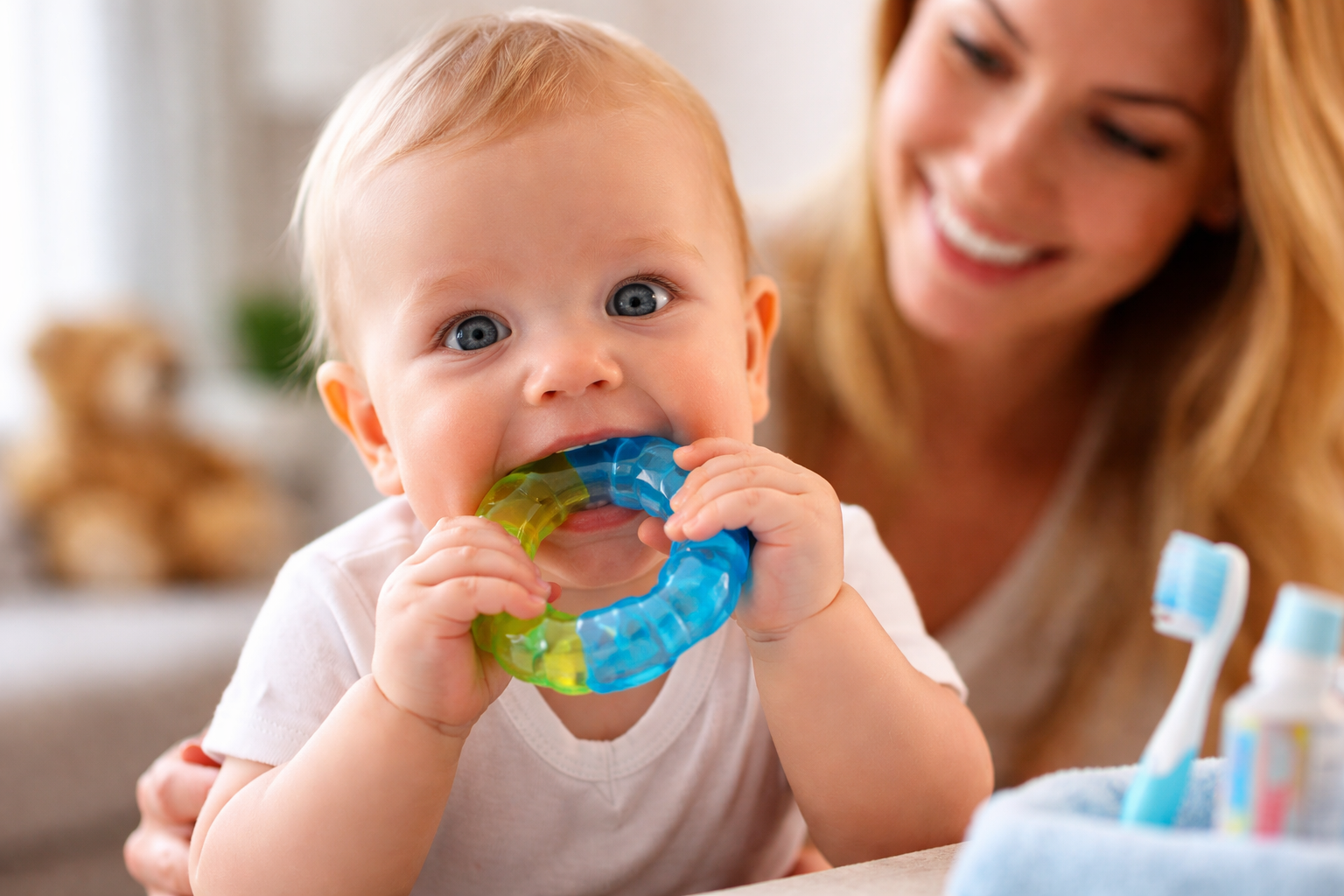
Teething is one of those milestones every parent hears about—but nothing quite prepares you for it until it starts. One day your baby is all smiles, and the next, there’s drooling, crankiness, and sleepless nights.
Beyond the discomfort, teething plays a big role in a child’s oral development. Understanding how it affects teething oral health helps parents make better choices early on.
The good news? With a little care and the right habits, parents can protect their child’s smile right from the start.
What Is Teething?
Teething is the process where a baby’s first teeth slowly push through the gums. It’s a natural part of growing up, even if it doesn’t feel that way at 2 a.m.
Most babies start teething between 4 to 7 months, but some begin earlier or later. That’s completely normal.
The full teething timeline usually continues until about age three, when all primary teeth have erupted.
Common signs include drooling, gum swelling, irritability, and an urge to chew on anything within reach—including your keys.
How Teething Impacts Oral Health
As teeth emerge, the gums become sensitive and inflamed. This makes the mouth more vulnerable to irritation if not cleaned properly.
Excessive drooling and constant chewing can introduce bacteria into the mouth. Without gentle cleaning, this can affect early oral hygiene.
Teething itself doesn’t cause crooked teeth, but habits like thumb-sucking or prolonged pacifier use during this stage can influence future tooth alignment.
That’s why early awareness of teething oral health matters more than most parents realize.
Common Teething Problems Parents Notice
Swollen or tender gums are usually the first thing parents spot. Your baby may pull at their ears or rub their cheeks.
Fussiness and discomfort often peak at night, turning bedtime into a mini drama series—no popcorn required.
Some babies eat less or wake more often, which can worry parents even though it’s temporary.
Mild fever and excessive drooling are common, but high fever or diarrhea are not typical teething symptoms and should be checked by a doctor.
Teething and Oral Hygiene: Why Early Care Matters
Even before teeth appear, bacteria can build up in the mouth. Cleaning the gums helps reduce this risk.
Early oral care sets the foundation for healthy habits later. Think of it as teaching good manners—but for teeth.
Neglecting oral hygiene during teething can increase the risk of early childhood cavities once teeth come in.
Starting early makes dental care feel normal, not scary, as your child grows.
What Parents Can Do to Soothe Teething Discomfort
Safe home remedies work wonders. A clean, chilled teething ring can calm sore gums quickly.
Cold compresses applied gently to the gums can also provide relief—no fancy gadgets needed.
Using a clean finger to massage your baby’s gums is surprisingly effective and comforting.
Avoid numbing gels with harsh chemicals or home remedies passed down without medical advice. Not everything “traditional” is safe.
How to Clean a Baby’s Mouth During Teething
Before teeth erupt, wipe your baby’s gums once or twice daily using a clean, damp cloth.
Once the first tooth appears, it’s time to start brushing with a soft, baby-sized toothbrush.
Use a tiny smear of fluoride toothpaste—about the size of a grain of rice.
Choose products designed specifically for babies to avoid irritation and make brushing easier for both of you.
When Should Parents Visit a Dentist?
Dentists recommend the first dental visit by your child’s first birthday or when the first tooth appears—whichever comes first.
If you notice white spots, persistent gum redness, or delayed tooth eruption, it’s time to book an appointment.
At American Medical Center, our dentists guide parents through teething, oral hygiene, and long-term dental care with confidence and clarity.
Early visits build trust and remove fear—for both parents and kids.
Tips to Protect Your Child’s Oral Health Long Term
Start healthy habits early by cleaning the mouth daily and limiting sugary drinks.
A balanced diet with proper nutrients supports strong teeth and gums during teething.
Regular dental checkups help catch small issues before they turn into big ones.
Think of it as routine maintenance—like servicing a car, but much cuter.
Conclusion
Teething may be uncomfortable, but it’s also a crucial step in your child’s oral development. With proper care, parents can protect gum health, reduce discomfort, and prevent future dental issues.
Simple habits, gentle cleaning, and timely dental visits go a long way in supporting teething oral health.
At American Medical Center, we believe early dental care builds confident smiles for life. And that’s something worth smiling about—teeth or no teeth yet.

