
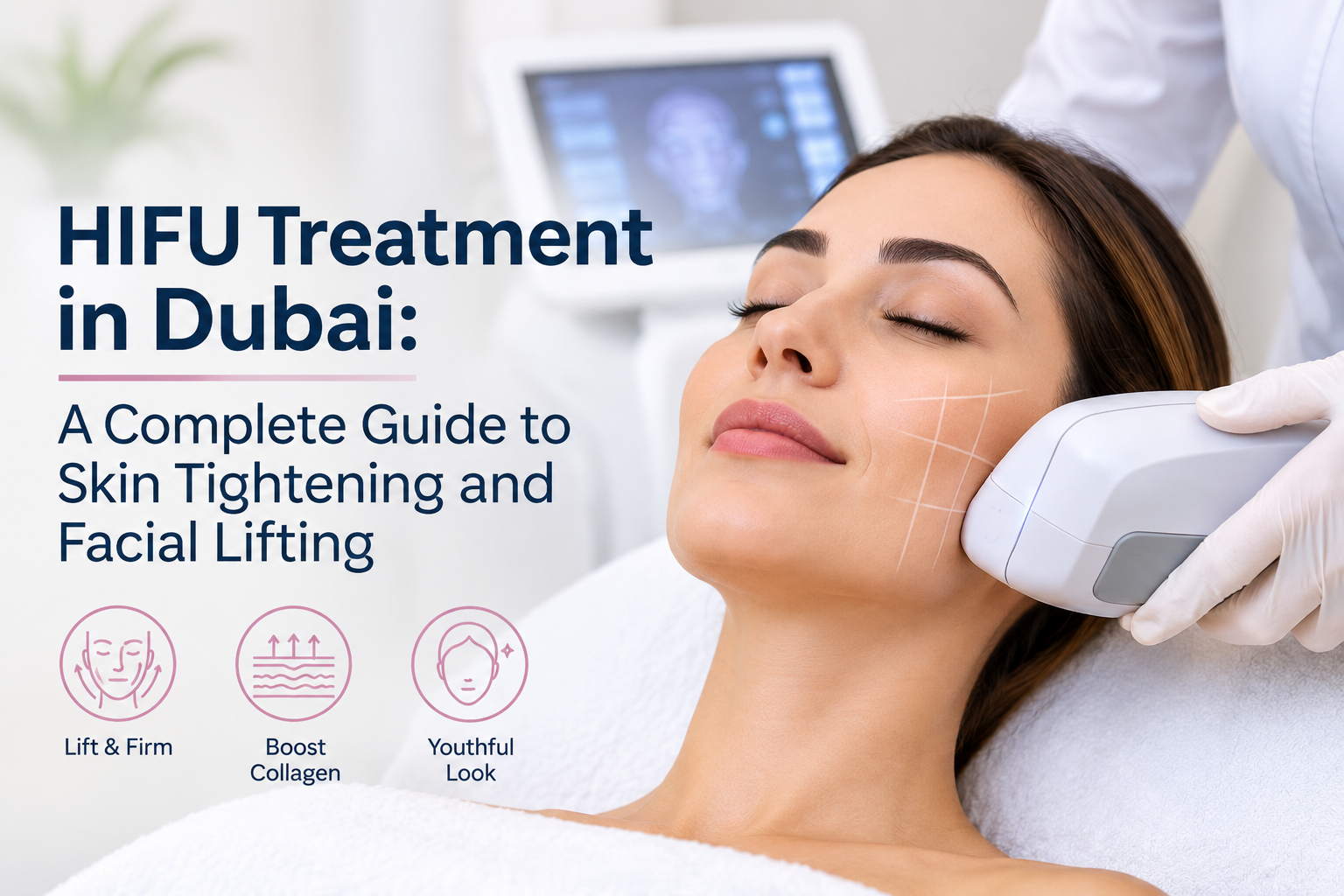
Aging causes our skin to lose some of its elasticity and tightness. For example, loose skin around your cheeks, a softer jawline, lines or sagging around your neck. But if the adverse effects of aging have to be lessened, then the way to go is a non-surgical procedure, and this is one of the reasons why HIFU Treatment in Dubai is becoming more and more popular.
Through the use of focused ultrasound energy, HIFU targets tissue growth below the skin’s surface while still allowing for the outer layer of skin to remain intact. This works on the deep skin layer, so can help support and stimulate the body’s natural collagen (protein which keeps the skin smooth and firm). No cuts or stitches are required with a HIFU treatment, unlike with a facelift.
Your body is unique and your skin is too. In order to determine the best skin treatment, it is important for us to understand your concerns, your skin and what you hope to achieve. This article will explain how HIFU works, its advantages, who it is suitable for, what to expect from the treatment, and what results you may expect.
What Is HIFU Treatment?
HIFU is a non-invasive cosmetic treatment that uses focused ultrasound to heat targeted layers of skin. This signals to the tissue to trigger the process of natural healing and allows collagen production to increase.
Collagen is the protein that gives skin its structure and helps keep it strong and firm. As collagen naturally degrades with age, the skin begins to sag and contours of the face and neck lose their crispness.
HIFU treatment is expected to solve these problems by enhancing collagen production over the treated areas. It can be performed on various body areas including the face, cheek, jaw, chin, head, neck, as well as a few other areas.
The other main reason many people choose HIFU is because it’s not invasive or surgical. Since there are no cuts or stitches, you may able to get back to your normal daily activities in a day or two after the session. But a consultation with a professional should be booked before undergoing treatment.
How Does HIFU Skin Tightening Work?
The skin has many layers. Some layers are just beneath the surface of the skin and others are deep underneath. HIFU brings focused ultrasound energy to the specified deep depths, with no effect on the outer skin surface.
The ultrasound energy will create small areas of controlled heat in the tissue. This stimulation can result in your natural response leading to the production of new collagen.
When collagen begins to grow, the areas may become firmer and appear to be lifted over time. This is one reason HIFU is used to treat patients with mild to moderate skin laxity and to improve the definition of the face.
Usually the results are not immediate. Patients might see some early benefits, but around two to three months later you will start to notice improvement as the collagen is stimulated. The results can continue to change over time.
Advantages Of HIFU Treatment
HIFU to enhance skin firmness are listed below. It really comes down to your age, the condition of your skin, your degree of sagging skin and the device.
Non-Surgical Facial Lifting
A second reason HIFU is a popular treatment is to treat mild skin sagging. Works well in tightening the skin by targeting its deep structural layers, which may result in a natural lift and a more youthful appearance.
Enhances Skin Tightness
Skin loses its firmness as collagen declines with age. HIFU stimulates collagen production and may help tighten the skin over time, which may be helpful for people with early skin laxity on the face and neck.
Supports In Developing The Jawline
A weak jawline is one of those problems that can come with loose or sagging skin. HIFU may address this problem by lifting and contouring the lower face giving a sharper jaw line depending on your case.
May Minimize Fine Lines
HIFU also helps improve the overall appearance of skin tightness. For others you may be able to tell that some of the small lines don’t seem as prominent now that the skin has tightened.
No Cuts or Stitches Required
HIFU is non-invasive. No scalpels or stitches are used and because it is not an invasive treatment, there isn’t a need for an extended recovery time. They will be able to resume everyday activities after treatment but some redness and tenderness / swelling may be seen.
Gradual and Natural-Looking Changes
Because HIFU stimulates your body to produce collagen for you, the results will become more natural as they are actually produced by your body. It is frequently observed that the face seems to change more gradually so the change appears more natural.
Which Areas Can Be Treated With HIFU?
The most common HIFU treatment is used on different parts of the face and neck where the skin is starting to become less tight. The sites of treatment are individualized for each patient according to the skin condition and the equipment used.
Forehead and Brow region: This procedure can be used to tighten the loose skin around the forehead and eye brows and lift the eye brow area a bit in the right patients.
Cheeks: As skin ages, loses collagen, and is affected by gravity, the cheek area can eventually lose fat and firmness. HIFU treatment may assist in tightening the skin and improve the fullness of cheek area.
Jawline: Losing definition in the jawline can cause the lower face to look dumpier. HIFU might help to tighten the skin and give a more sculpted look to the face.
Some HIFU machines have the ability to treat deep tissue and might be able to improve the fullness beneath the chin. The result will differ based on whether the double chin is due to loose skin or excess fat.
Neck: Loose skin around the neck is a very common problem that comes with ageing. HIFU can be used to help tighten neck and may improve mild skin slackening.
As time goes on, the chin can become less prominent. HIFU treatment can be effective in improving the chin depending on which device and treatment plan is used.
Who makes for a good candidate for treatment with HIFU?
This option could be suitable for an adult who is starting to notice signs of skin laxity and who wants to improve their appearance without surgery.
HIFU might be right for you if you have: Loose skin in your cheeks, jawline, chin and neck. You might also be a good fit if your skin feels less firm and you want a more gradual result.
For those who are looking for a non-invasive procedure with minimal recovery time, HIFU is an option.
Still not everyone is a candidate for HIFU treatment. Individuals with excessive skin laxity that requires more skin lift than what HIFU alone can provide might consider other options like a surgical facelift.
What Happens During a HIFU Treatment Session?
If it’s your first time having the procedure in Dubai, you may feel worried about it, so it can help to understand what it’s like.
The first step will typically be a consultation. The professional will examine your skin, ask what your concerns are and what results you are hoping for. A medical history might be obtained to ensure that there are no other issues that would make the treatment unsuitable.
The area that is being treated is then washed as the plan of treatment is being prepared. If required, an ultrasound gel can also be used on the skin to allow the ultrasound device to make appropriate contact with the skin.
The clinician moves the HIFU handpiece over the area/areas to be treated. The device transmits highly concentrated ultrasound energy at specific depths below the skin. At the time, you will experience warmth, tingling, or small pulses. Certain areas could feel different than others.
The duration of the procedure will vary according to treatment area, device and your treatment plan. The gel is then wiped off and you’re free to continue with your usual routine.
How Painful is HIFU Treatment?
Pain is among the most common side effects before the HIFU treatment. Pain depends on a person’s tolerance, the area being treated, the device used, and the energy setting.
A warm or tingling sensation in the skin can be experienced by some. Some people can feel a pulsating or prickling sensation. The area around the chin/jaw line may be more sensitive than the rest of the face.
Most patients tolerate the treatment, but it is not pain free. If you are having any discomfort during the treatment, tell your practitioner so they can check the setting of the treatment and the level of your comfort.
HIFU treatment – how many sessions?
The number of treatments you will need depends on the condition of your skin, your age and the area being treated as well as the treatment you have. Most treatments are single appointments with a review and follow up appointment if necessary.
Repeated HIFU every several weeks probably isn’t necessary. Ensure adequate intervals because collagen takes time to boost.
Talk to your practitioner about the most effective way to treat your skin. One or two treatments,along with lifestyle changes is often more effective than treatments that are applied often with no significant results.
When Can You See Results After HIFU?
HIFU is NOT a quick fix instant face lift The production of collagen takes time and the effects are slow.
Some people might notice a bit of tighter skin in the hours following the treatment, but the real difference will be visible after two to three months. Sometimes, the change continues even longer.
The final results may differ depending on your age, the skin condition, amount of collagen present and degree of skin sagging prior to undergoing HIFU. And keep in mind that, since the HIFU procedure triggers a gradual natural process and isn’t a face lift or the same as an invasive procedure, the results can be quite mild.
How Long Do HIFU Results Last?
A: Clearly it’s a yes/ no answer to say how long the effects of HIFU sessions will last.
The results may be sustained for a period of months, even years, depending on the patient, the device and the treatment modality. The ageing process is continuing and the skin may lose firmness gradually.
Good skincare routines and the right lifestyle habits can improve overall skin health. However good skincare and lifestyle choices will not be able to stop the natural way of ageing.
If your skin reacts well, a second treatment may be suggested by your physician.
Is HIFU Treatment Safe?
Like any other cosmetic treatment, you should expect some kind of HIFU side effects, as it can pose a risk of complications if not properly administered by a medical professional.
There can be temporary redness, mild swelling, tenderness, tingling and/or sensitivity of the treated area. These sensations typically resolve over time. Sometimes, patients may notice bruising, numbness, and/or other side effects.
Tissue damage can occur if treatment is wrongly timed or applied to the wrong tissue. So it pays to spend some time finding the right practitioner with the right device! Cosmetic ultrasound should be performed only by adequately qualified professionals, according to the American Institute of Ultrasound in Medicine.
Be sure to tell your practitioner about your medical history, any skin problems, and any previous cosmetic procedures you’ve had before the treatment. The practitioner will also help you decide if HIFU is the right treatment for you.
Who Should Avoid HIFU Treatment?
HIFU isn’t appropriate for everyone. You shouldn’t receive the treatment if you have the following: skin infections or cuts over the area to be treated excessive skin irritation over the area to be treated.
It may not be right for all individuals, including people with certain medical conditions, those who have metal or electronic devices in or near the treatment area (depending on the device and its specific instructions).
Women may want to consult a doctor before seeking a cosmetic procedure. If you have a significant amount of sagging skin, be aware that HIFU treatment may not lift your skin as much as you would like.
The most effective way of finding out if you have any health risks and if there is an alternative course of treatment that would be more effective is going through a full medical examination.
What Should You Do After HIFU Treatment?
HIFU has the benefit that most people should not experience a lengthy recovery period. Still, by following the aftercare advice, you’ll have the best chance of keeping your skin feeling the same.
After your session, you should follow these basic guidelines:
Keeping your skin clean: wash your skin with a mild cleaner and avoid the use of irritating skincare products in the event of sensitive skin after treatment.
A moisturiser that’s right for your skin can reduce irritation and ensure your skin remains moist.
Apply Sunscreen: Avoid exposing your skin to direct sunlight. Use a sunscreen with at least SPF 30.
Avoid too much heat: If your skin is reactive, this should be avoided until the skin has settled (this would include sauna, steam room, etc).
Depending on the device and treatment settings, your practitioner may recommend specific skin care products or advise on avoiding certain treatments for a period of time.
Most people return to their usual state after HIFU, however you should always adhere to your treating professional’s advice.
HIFU vs Surgical Facelift: What Is the Difference?
HIFU and surgical facelifts both improve sagging skin but do so in very different ways.
HIFU is a non-invasive treatment that sends focused ultrasound waves into the deep layers of the skin, helping to produce collagen. HIFU is said to be most suitable for those with early skin laxity.
A surgical facelift (rhytidectomy) is a procedure that lifts and tightens the tissues of the face and removes or redrapes extra skin. Generally, it is designed for individuals with more advanced ageing processes who want to achieve a more significant change.
HIFU typically offers a quicker recovery time than a surgical facelift, but a surgical facelift provides a greater lift.
It all comes down to your level of skin sagging, your expectations, and your overall health. A consultation can help determine which procedure is best for you.
How Can You Maintain Your Skin After HIFU?
Helping your skin recover after treatment can help improve its overall health and quality. No-one can stop the ageing process, but you can help your skin with a few quick tweaks to your daily life.
Start with a gentle skin care regimen, including cleansing, moisturising and daily application of a broad-spectrum sunscreen. Sunscreen is important because exposure to too much sun will speed up the ageing of the skin.
You should also drink enough water, consume the healthy foods, sleep well, and do not smoke.
While it is important to manage realistic expectations. HIFU can’t guarantee to keep your skin youthful forever so look at what your dermatologist has said about daily skin care routine, other treatments and whether they are appropriate.
Why Consider HIFU Treatment at American Medical Center, JLT?
If you’re thinking about a cosmetic procedure, don’t just choose the first clinic you find. You should be able to ask questions about your procedure and freely speak with the person who is doing the procedure.
American Medical Center-JLT understands each patient’s skin needs and recommends the right aesthetic solutions accordingly.
You may want to consider a consultation to take a look at your skin and find out what sort of a result is possible to obtain. Then HIFU treatment can be personalized to your skin needs rather than offering the same procedure for everyone.
Our goal is to enable our patients to make an informed choice in their skin and to select treatment options that meet their needs and expectations.
In Dubai, you can contact the American Medical Center, JLT. To get details about the treatment and book a consultation.
Frequently Asked Questions About HIFU Treatment in Dubai
1. Is HIFU treatment suitable for all skin types?
HIFU may be suitable for people with different skin tones, but suitability depends on the individual’s skin condition, medical history, and the device being used. A professional consultation is recommended before treatment.
2. Can HIFU give you a natural-looking facelift?
HIFU may help improve mild to moderate skin sagging by supporting collagen production. The results develop gradually and can give the face a firmer appearance. However, it cannot replace the results of a surgical facelift.
3. Can I return to work after HIFU treatment?
Most people can return to their normal activities shortly after the procedure. Some may experience temporary redness, swelling, or tenderness, but these effects generally settle with time.
4. Does HIFU help with a double chin?
Certain HIFU devices can target tissue beneath the chin. Depending on whether the concern is loose skin or excess fat, the treatment may help improve the appearance of the area. Results vary between individuals.
5. Can HIFU remove wrinkles completely?
No. HIFU is mainly used to improve skin firmness and mild sagging. It may help reduce the appearance of some fine lines, but it cannot remove all wrinkles or deep facial folds.
6. How often should I get HIFU treatment?
There is no single treatment schedule for everyone. The recommended frequency depends on your skin condition, the device, and your response to the previous session. Your practitioner can suggest an appropriate follow-up plan.
7. Is HIFU better than Botox?
HIFU and Botox work differently. HIFU uses ultrasound energy to target deeper skin layers and support collagen production. Botox works by relaxing specific facial muscles to reduce expression lines. The better option depends on your skin concerns and treatment goals.

