
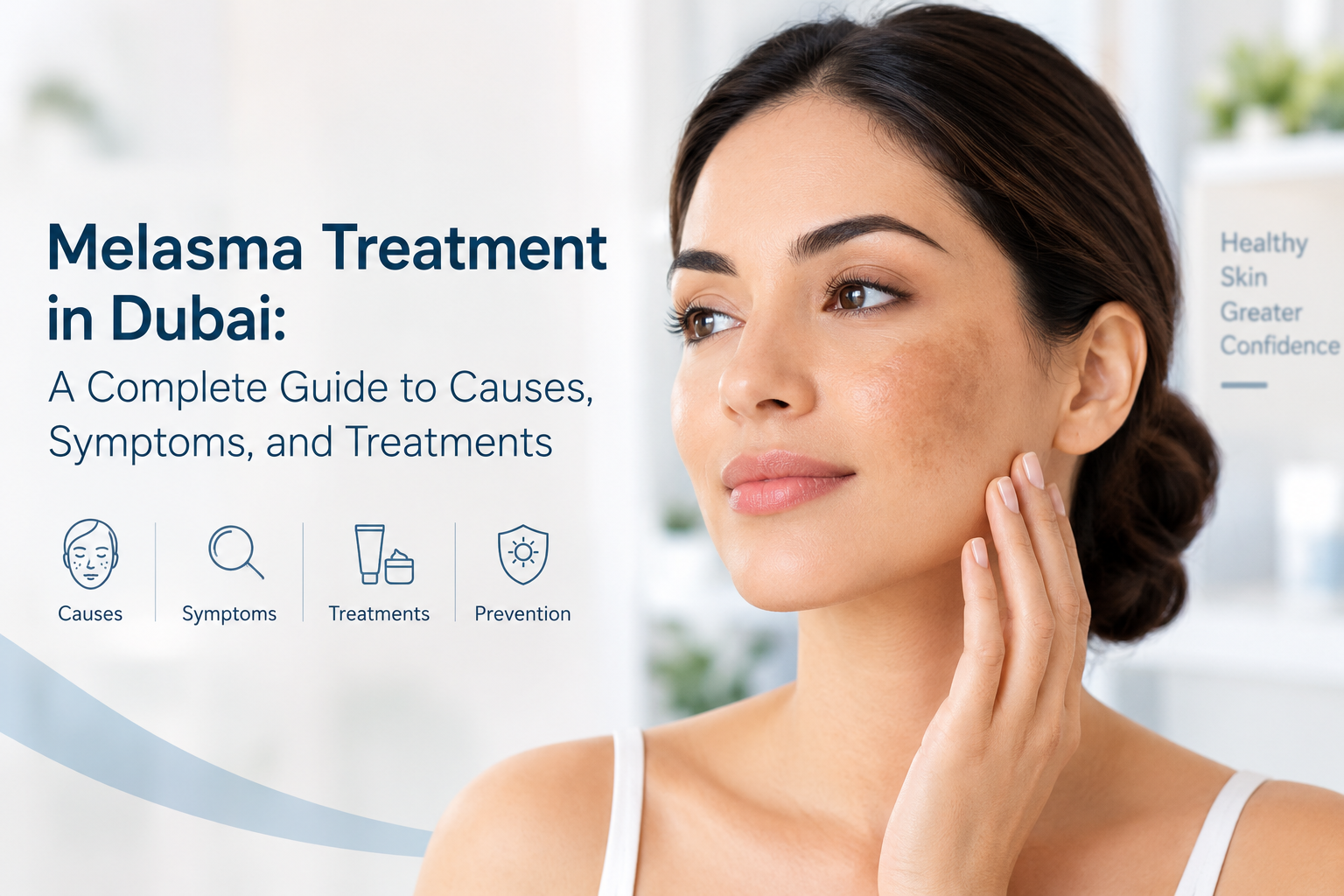
Melasma is a very common skin condition that appears as brown, grey-brown or darker patches on the face. The face is most often affected, on areas such as the cheeks, forehead, nose, upper lip and chin. While melasma is not harmful in most cases, many people find it to be a frustrating skin concern as it can be quite persistent and can darken over time, especially in the sun.
If you are trying to find information on what causes melasma and which treatments work, this information will give you a good idea about the condition and when it’s necessary to have treatment. We provide a patient-focused service at the American Medical Center, JLT where you can get professional advice on pigmentation and treatment options according to your skin type and problem areas.
What Is Melasma?
Melasma is a common skin condition that causes dark, discoloured patches on the skin. It happens when the body makes too much of the natural pigment of the skin, melanin. The excess melanin forms ‘pigmentations’ or darker areas on the skin, which may develop gradually or symmetrically on both sides of the face.
Women are more likely to get melasma, especially during the years when hormones are fluctuating. But men can get it too. Melasma can occur in people with medium to darker skin tones, although all races can experience it.
What it looks like: Known for its symmetrical, brown or gray-brown patches, melasma can be a tricky form of pigmentation to treat. The patches might improve with treatment, but they often come back in response to the sun and other triggers. That’s why you might need a combination of products, treatment, and sun protection.
What Causes Melasma?
There are many potential triggers for melasma. For example, the symptoms of melasma develop as a result of various factors that influence how the skin forms pigment. Learning about the potential triggers of the disorder can be a key step in managing the condition and choosing the most effective treatment plan.
- Sun Exposure
Sunlight is one of the main triggers of melasma. Ultraviolet (UV) rays can stimulate melanin production, which not only amplifies existing dark patches but also creates new areas of pigmentation. Visible light might also make melasma worse, particularly in individuals with darker skin tones.
Since Dubai is known for its bright weather, it’s equally necessary to take sun protection measures all year-round. When the weather seems to be cool or if you’re indoors most of the day and close to windows, sun rays can also lead to pigmentation. Make sure you use a broad-spectrum sunscreen every day, and avoid prolonged sun exposure.
- Hormonal Changes
Hormonal fluctuations may have something to do with it. Pregnancy, for example, causes hormonal changes that can trigger melasma, which is why it also has the nickname “mask of pregnancy”. Hormonal medications, such as some types of birth control, are also a possible factor in some individuals.
Nevertheless, not everyone who has a hormone imbalance will get melasma. If you develop pigmentation while you are pregnant or after taking medication, discuss your concerns with your doctor. Don’t stop any medicines that have been prescribed to you without consulting your doctor.
- Family History
And it might be inherited. The genetics of your family could put you at a higher risk of getting melasma. If your bloodline has a history of this type of pigmentation, you might develop it yourself, but at least you can try to do what you can to prevent it, particularly in protecting yourself from the sun.
- Heat & Visible Light
Heat can potentially aggravate melasma for certain individuals, although there is not an entirely clear link between heat and melasma. Prolonged heat and sun exposure may make melasma more difficult to manage. Visible light has also been shown to influence melasma, so sunscreen selection may be important.
Tinted sunscreens with iron oxides may offer even greater protection against visible light. Talk with your dermatologist about a product that works with your skin and lifestyle.
- Skin irritation and inappropriate products
Acting harsh on the skin or using strong scrubs or irritating treatments can also bring out pigmentation, as inflammation has an added darkening effect, especially in the more pigmented skin types.
Multiple actives or short-term use of “miracle” skin-lightening creams can cause more harm than good. A very simple skincare routine of gentle cleansing, moisturising, and sun protection is a safer place to start.
What Are the Symptoms of Melasma?
Symptoms The most noticeable symptoms of melasma are the darker patches on the skin. These patches of skin are usually flat and are unlikely to be painful or itchy. Symptoms may develop gradually, or become more evident after sun exposure.
Melasma typically appears as a collection of spots on the cheeks, forehead, bridge of the nose, upper lip, and chin. Melasma can also manifest as patches on the jawline, and on other areas of the face. Rarely, pigmentation can occur on parts of the body exposed to sun, such as the neck and forearms.
Depending on the skin tone of the individual and how deep the pigment is present, the patches may be light brown, dark brown or greyish brown. The patches may be symmetrical on either side of the face.
Your skin texture remains intact when you develop melasma. If you notice a sudden dark patch, change of shape or colour, bleeding, painfulness, or an appearance that is different from your already existing pigment, you should consult with an experienced healthcare practitioner. It’s not just the high pigment that can be different, so it pays to get it checked.
Diagnosing Melasma
Having the correct diagnosis can help you to receive the correct treatment for your skin. When you visit your doctor, a dermatologist, or other healthcare professional they will typically ask if the age of onset was early or late, if it has changed or remained the same over time, and if you have identified any triggers.
The doctor might ask about your medical history, family history, medications you are taking now, your use of skin products and your sun exposure. Your skin will be examined to determine the pattern and look of the pigmentation. Sometimes special light or other skin tests can determine the depth of the pigment.
Melasma can occasionally resemble other skin conditions such as post-inflammatory hyperpigmentation caused by acne or skin irritation. It is important to examine the area carefully to differentiate the two as the treatments may be different.
During a consultation at American Medical Center, JLT, our team can give you advice about your face and help you understand what options might be available to you.
What Are the Best Melasma Treatment Options in Dubai?
The ideal melasma treatment varies according to your skin type, the location of the pigment, whether there are any triggering factors and the duration of the problem. Certain patients find that they are able to improve with simple prescription bleaching creams and sun avoidance.
It can be a persistent problem that needs treatment for life. The goal is to diminish the appearance of dark patches, and minimize the risk of a recurrence.
1. Topical Creams for Melasma
Topical treatments are medications that can be directly administered onto the skin, often as a gel, cream or lotion. Topical treatments are frequently the initial steps to manage melasma and may be prescribed by your doctor based on your skin type and medical background. Topical treatments may include hydroquinone, azelaic acid or other pharmaceutical medications to treat pigmentation.
Hydroquinone may be effective at clearing excess pigment if used with appropriate medical supervision. Azelaic acid may also be effective in treating general pigmentation, and may also be advantageous if the individual has both acne and pigment. There are other products that may be prescribed alone or in combination.
Your treatment may lead to redness, dryness or irritation if not used properly. Certain prescription creams are not suitable if you are pregnant, and it may be necessary to change your treatment if you are pregnant, breast-feeding or trying to conceive. Do not use prescription skin-lightening cream without medical advice.
Results may be slow — typically several weeks or even longer. Using more product than directed will not speed up the process.
2. Chemical Peels for Melasma
Chemical peels involve the application of a special solution to exfoliate the skin and promote new cell growth. Depending on the type and strength of peel, this can also improve pigmentation problems and uneven skin tone.
Peels with glycolic acid or other appropriate acids might be an option for some with melasma. But the peel must be selected with care. A peel that is too strong or causes too much irritation can exacerbate pigmentation in people with darker skin tones.
A skin consultation with a practitioner is essential prior to treatment. The practitioner will advise on the peel being used, risks involved, treatment recovery and the number of treatments required. Chemical peels may improve the appearance of melasma, but they do not ensure it will be removed entirely or permanently.
3. Laser and Light-Based Therapies
In some cases, laser and light-based treatment options can be used for melasma, when other treatments have failed to achieve adequate results. These treatments utilize concentrated energy to target pigmented cells or impact the skin in other ways, based on the specific device and treatment used.
Laser is not the ideal method of treatment for all types of melasma. Certain lasers may lead to burning of the skin or post inflammatory hyperpigmentation where the dark patches become darker. The melasma may also recur even after an initial satisfactory response.
It depends on the type of laser used, the amount of energy, your skin tone and the expertise of the person using the laser. A trained health professional should be able to tell you if a device is safe for your skin and go through the risks, benefits and alternatives.
In the event you’re contemplating laser therapy for melasma in Dubai, make sure to ask if the proposed treatment is appropriate for melasma or for other sorts of pigmentation. Just because a treatment suits one form of dark spot doesn’t imply it’s appropriate for another.
4. Medical-Grade Skincare
A personalised skincare plan can not only help with the treatment of melasma but also limit the darkening of the skin. Gentle cleansers, moisturisers and those prescribed by a professional can help preserve the skin barrier and minimize inflammation.
Certain skin-care products include vitamin C, niacinamide, azelaic acid or other ingredients that could potentially help lighten uneven skin tone. They work to some extent, but don’t always adequately treat more pronounced melasma when you use over-the-counter products alone.
Avoid applying several active products at the same time, particularly when you notice skin turning red, dry and sensitive. It is always best to test new products one at a time and follow instructions.
5. Tablets in Certain Conditions
In rare cases, your dermatologist may suggest a tanexamic medication if your melasma doesn’t improve to your satisfaction with other treatments. This medication may not be used by all patients and should not be a first line treatment for everyone.
It may cause blood clots in people who are at risk from them. Your doctor should discuss your personal risks, medical history and the medicines you are taking before prescribing, and it should never be started without medical supervision.
For most individuals, daily sun protection and appropriate topical regimens are the mainstay of melasma treatment.
Why Is Sunscreen Important for Melasma Treatment?
Taking care of your skin by protecting it from the sun is an integral part of controlling melasma. Though topical treatment can fade the dark patches, the sun can cause them to reappear, or make them worse.
Select a broad-spectrum sunscreen with SPF 50 or higher and use it generously on all exposed areas of skin. Reapply to all exposed skin at least every two hours when outdoors, and as quickly as possible after swimming, sweating, or wiping your face. Consider using a tinted sunscreen that contains iron oxides.
Sunscreen is most effective when paired with other protection. Choose broad brimmed hat, seek shade whenever possible, and know the hours when the sun is at its peak. It is helpful to remember these tips in a place like Dubai where the sun can be strong!
Even when the pigmentation has settled, do not drop your sun defense. When you no longer require sunscreen use, it is likely that the pigmentation returns.
How Long Does Melasma Treatment Take?
Melasma treatment is not instantaneous – it may take time. When using topical creams the time to see improvements can differ – some get results within a few weeks of use whereas others are not seeing improvements for several months. Depth of pigment, skin type, cause and treatment all play a part.
Treatments generally must be applied repeatedly over time. Chemical peels or other treatments might be applied more than once, with the interval between treatments determined by the type of treatment used and the state of your skin. Your clinician can tell you what to expect.
Here is some additional information that you may want to consider: Improvement does not necessarily mean resolution. Melasma is chronic and may recur, especially in the sun or with hormonal fluctuations. Use of appropriate skincare, sun avoidance and regular follow-up visits can help you maintain your improvement.
Watch out for new treatments or clinics claiming to be rid of it immediately or for good. No treatment will ever prevent melasma from returning.
Can Melasma Be Prevented?
Preventing melasma may be challenging if you have a family history of it or experience hormonal fluctuations. But we can take steps to be healthier to minimize the chances of your melasma worsening.
One of the most important thing to do is to applying sunscreen daily. Select the type of sunscream according to your skin, and apply it regularly even the sky is clear. Cover your skin with protective clothing and hat when you outdoors, and find a shady area when it is possible.
Do not scrub or use any very harsh products that lead to burning, redness or peeling. If any product causes irritation, discontinue it and ask for guidance if the irritation persists.
Inform your doctor if you observe that pigmentation worsens after using a certain activity, medicine or cream. Recognising these triggers can help with the management of the condition.
Melasma During Pregnancy Treatment
Pregnancy: Hormone alterations might cause the emergence of melasma or make it more prominent throughout being pregnant. It might clear after beginning however this isn’t at all times the case.
Consult your Doctor before use of any treatments in pigmentation as some may not be recommended in pregnant women. Treatments such as hydroquinone and oral tranexamic acid are not usually recommended in pregnant women and other options should be discussed with a professional.
Most pregnant women need only a gentle skincare regimen and daily use of sun protection. Your healthcare provider can advise you on whether those are appropriate for you and if you should delay treatment until after your pregnancy.
Don’t begin using potent skin-lightening products or get chemical peels and laser treatments without consulting a doctor.
How to Choose the Right Clinic for Melasma Treatment in Dubai
It’s about more than just selecting the right treatment to give you quick results. Because melasma can be stubborn to treat, it’s worth selecting a clinic that will spend the time getting to know your skin and talking to you about your options.
Choose a reputable doctor who has performed pigmentation and melasma treatments before. The clinic must examine your skin prior to the treatment, inform you of any potential side effects and whether your pigmentation is likely to come back. The clinic must also offer post-treatment advice and how to protect yourself from the sun.
A comprehensive treatment plan will take into consideration your skin type, medical history, lifestyle and finances, in addition to your expectations. The staff should be easy to communicate with, and you should not hesitate to ask questions about the procedure, how long it may take to see results and what to do if your skin becomes irritated.
American Medical Center, JLT, provides an expert to the patients to talk and share their skin issues, and also tell them the most effective way to treat the pigmentation of the face. The best treatment can be accurately confirmed after a personalized assessment.
Commonly Asked Questions on Melasma Treatment in Dubai
Is melasma treatment permanent?
However, it can sometimes reappear. Patches that are sun-sensitive, linked to a hormone imbalance or other triggers may come back when exposed to sunlight. Continued protection from the sun and a good maintenance program can help you keep it at bay.
What is the best way to treat melasma?
One approach to treat melasma does not work for all patients. Sun protection and appropriate topical therapy are crucial in management. Chemical peels, lasers, and other treatment modalities are options in some cases after evaluation by a doctor.
Does melasma ever go away?
Although that pregnancy-related melasma may fade after pregnancy, it doesn’t in every case. Other types may stay for years with no treatment. Ways to avoid more pigmentation from happening include staying out of the sun as much as possible and seeing a trained provider to learn about options for lightening.
Does laser treatment remove melasma completely?
Laser therapy can enhance pigmentation in some cases, but cannot promise to remove all of it. Pigmentation may also darken or return after treatment in some cases. A thorough evaluation will help determine if laser treatment is appropriate.
How much does melasma treatment cost in Dubai?
This varies according to the type of treatment used, number of sessions, extent of pigmentation and clinic charges. Depending on the severity of pigmentation, topical treatment, chemical peels and laser treatments have varying costs and your doctor can advise you on what is best for your specific needs.
Can I treat melasma at home?
Support your treatment at home. We recommend application of daily sunscreen, a gentle skincare routine, and use of the correct products (as advised by a doctor). Refrain from using any unproven skin-lightening creams or aggressive home peels, which can cause further irritation and darker pigmentation.
Seek Expert Consultation for Treatment of Melasma in Dubai
Having melasma can take a toll on your confidence about your skin, and there are steps you can take to take charge. Knowing your potential melasma triggers, cleansing and caring for your skin properly, and shielding from the sun can all diminish the pigmentation, and prevent melasma from worsening.
The appropriate treatment will depend on your skin type, the depth of the pigment, and your overall medical history. Some individuals experience improvement with appropriate topical agents and sun protection, while others respond to a specific professional treatment. Although melasma can take time to improve, and may require ongoing treatment.
If you’re worried about patchy, brown spots on your skin or uneven skin tone, the American Medical Center, JLT, Dubai, is a good place to begin talking about your concerns and getting care options. Make an appointment to assess your pigmentation and get advice that is tailored to you.

